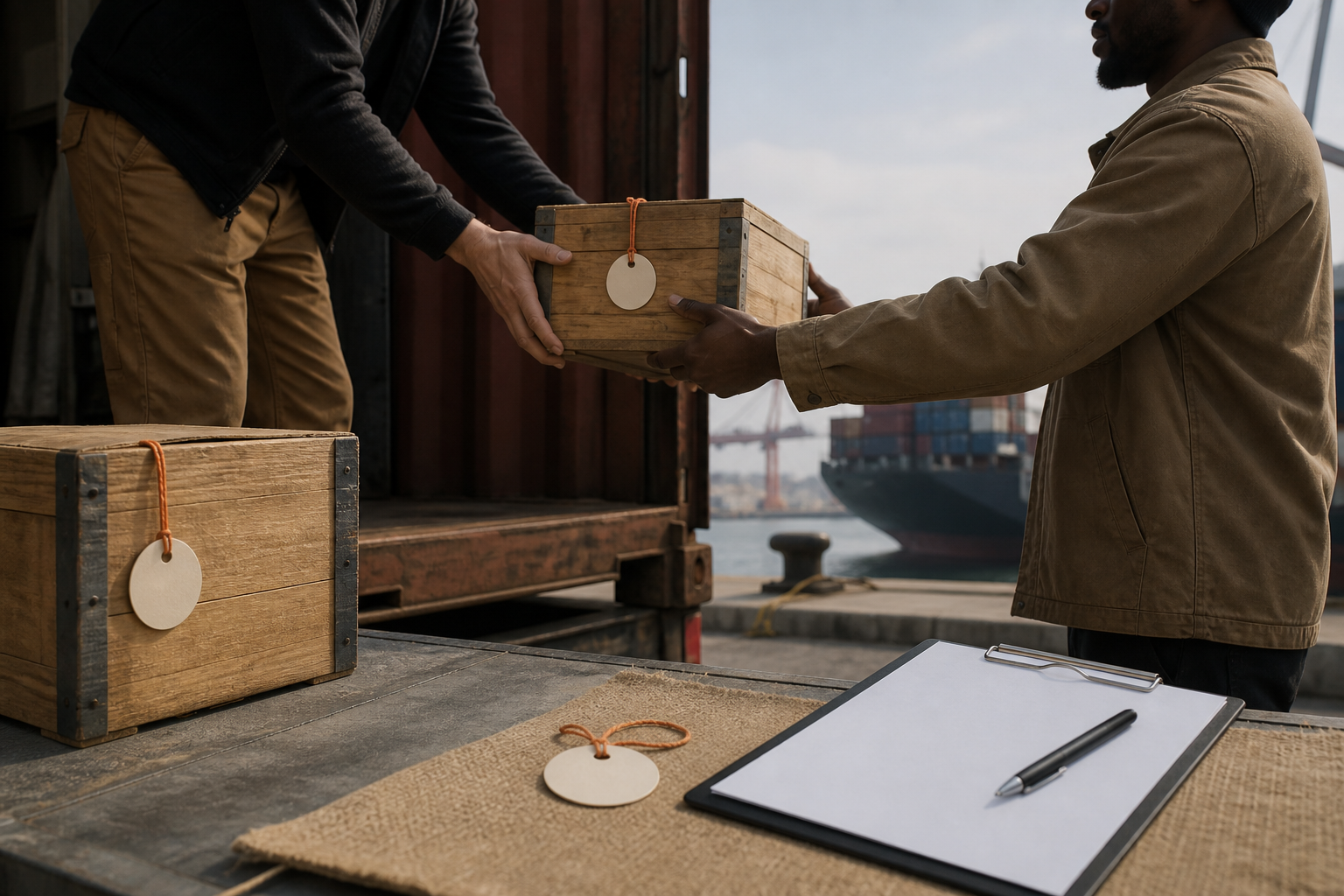
“FOB” is not a complete delivery instruction. Neither is “DAP”.
Before comparing a quote, ask for four things:
- the Incoterms rule;
- the version, normally Incoterms 2020 if that is what the parties intend;
- the exact named place, terminal or port; and
- the transport mode and any service assumptions.
The ICC Incoterms rules allocate defined delivery tasks, costs and risks between seller and buyer. They do not set the product specification, price, payment method, title transfer, warranty, insurance amount, customs classification or every product obligation.
That distinction matters. A supplier can offer DDP and still send you a quote with unclear product evidence, a weak inspection plan or a cost that is impossible to reconcile. A buyer can choose FCA and still need a freight forwarder, customs representative and product-compliance review.
This is an educational comparison, not contract interpretation. Use the official ICC material and qualified advice for the transaction you are actually signing.
1. The named-place test comes first
Write the term in full:
FCA, Supplier Factory, 18 Example Road, Rotterdam, Netherlands, Incoterms 2020
Or:
DAP, Buyer Warehouse, 10 Example Street, Manchester, United Kingdom, Incoterms 2020
The place is not decoration. It tells the teams where a delivery event occurs and helps identify which local movement, handover and risk questions need checking.
Avoid these quote lines:
- EXW Europe
- FOB China
- DAP UK
- DDP warehouse
They may be shorthand in an early conversation, but they are not enough to release an order. Ask the supplier to complete the place, port or terminal and transport mode before you normalise the offer.
Incoterm quality test
Mark the quotation incomplete if any answer is missing:
| Test | Question |
|---|---|
| Rule | Is it EXW, FCA, FOB, DAP, DDP or another defined rule? |
| Version | Does the quote state the intended Incoterms version? |
| Place | Is the named place, terminal or port exact enough for a carrier to price? |
| Mode | Is the rule compatible with road, air, rail, sea or multimodal movement? |
| Handover | Can both parties describe the delivery event in plain language? |
| Importer | Is it clear who will make import declarations and pay duties or taxes? |
| Exclusions | Are unloading, insurance, storage, demurrage and last-mile charges addressed? |
The last three questions are not all answered by an Incoterm alone. They are the operational checks that stop a shorthand term becoming a hidden cost.
2. What each term is trying to allocate
The five terms below are common in supplier quotes. They are not a ranking from worst to best. The right term depends on transport, capability, control, destination and the evidence you can manage.
EXW: goods made available at the seller's premises
Under EXW, the seller makes the goods available at a named place, usually its premises. The buyer takes on much of the movement from that point, including arranging collection and handling the next steps in the transport chain.
The practical buyer questions are:
- Who loads the goods onto the collecting vehicle?
- Can the buyer or its carrier complete the export formalities in the origin country?
- Is the supplier willing and able to provide export information or assist with the declaration?
- What happens if the goods are not ready when the vehicle arrives?
- Which costs are excluded from the supplier's price, including local handling and origin charges?
EXW can look cheap because the quote stops early. That does not make the shipment cheap. If the buyer cannot practically perform the export steps or control the local handover, ask the forwarder and supplier whether FCA is a more workable structure for the route.
Do not assume “EXW” means the supplier has no responsibilities at all. The actual agreement, local rules and the named place still matter. Ask a customs or logistics professional when the export role is unclear.
FCA: seller delivers to the carrier at a named place
FCA is often a useful term to investigate when a buyer wants a clear export handover and control of the main carriage. The named place must be specific because the seller's delivery task changes depending on whether the handover is at the seller's premises or another agreed location.
Questions to put on the quote:
- Is delivery FCA the supplier's premises or a named terminal?
- Who loads the collecting vehicle at the seller's premises?
- Which party appoints the main carrier?
- What export declaration and evidence will the seller provide?
- When does the carrier receive the goods and the buyer take the next transport decision?
FCA does not make the buyer's import work disappear. The buyer still needs to price main carriage, insurance if desired, import clearance, duty, tax, destination charges and delivery after the named place.
FOB: a sea or inland-waterway term with a named port
FOB is intended for sea or inland-waterway transport. The named port matters. “FOB Shanghai” does not identify the terminal, booking responsibility or destination-side costs well enough for a controlled quote.
The seller's task includes delivering the goods on board the vessel at the named port under the agreed rule. The buyer then needs to control or price the main voyage, import process and destination movement.
Before accepting FOB, ask:
- Is the shipment genuinely being carried by sea or inland waterway?
- Is the cargo suitable for the way the port handover is being described?
- Which port and terminal are named?
- Who books the vessel and who receives the transport document?
- Are origin terminal charges, documentation, inspection and consolidation charges included?
- Does the forwarder's quote start at the correct event, rather than silently duplicating a local charge?
For containerised cargo, ask the forwarder whether an FCA structure better matches the physical handover. The question is not about making FOB sound wrong. It is about making the named delivery event match the actual movement.
DAP: seller delivers ready for unloading at the named destination
DAP can be convenient when the seller or its forwarder can arrange the transport to a buyer's named destination, while the buyer remains responsible for import clearance and the associated duty and tax exposure under the rule.
The word “destination” needs discipline. Is it a warehouse address, a terminal, a site gate or a distribution centre with booking rules? Who can unload? Is the carrier allowed to wait? Are local delivery, storage or failed-delivery charges included?
Ask the seller to state:
- the exact delivery address or terminal;
- whether delivery is to the site gate or another point;
- who handles import declarations and broker instructions;
- who pays duty, import VAT and other import charges;
- who unloads the vehicle; and
- what documents arrive before the goods reach the destination.
DAP does not mean “all in”. A buyer can still receive a destination delivery invoice or a customs request if the quote does not spell out the assumptions.
DDP: seller delivers with import clearance arranged by the seller
DDP is often presented as the most convenient term because the seller takes on a broad set of transport and import tasks up to the named destination. That convenience can be real, but it needs a capability check.
Ask:
- Can the seller or its appointed party legally and practically act in the import role for this destination?
- Who is named on the customs declaration and who supplies the import evidence?
- Which duties, import taxes, broker charges and destination services are included?
- Can the seller provide the documents the buyer needs for accounting, product traceability and marketplace records?
- What happens if the carrier requests a power of attorney, importer number or local tax information?
DDP should not be treated as a promise that every tax, product or marketplace obligation has been solved. A seller's price can include a delivery service while leaving the buyer with evidence and compliance questions. If the seller cannot explain the import path, investigate DAP or another structure with a qualified customs professional.
3. Buyer-side responsibility map
This is a working comparison, not a substitute for the official rule. “Buyer” and “seller” describe the usual allocation under the named term. A contract can add obligations, and local procedures can affect how the parties perform them.
| Question | EXW | FCA | FOB | DAP | DDP |
|---|---|---|---|---|---|
| Seller's starting point | Makes goods available at named premises | Delivers to carrier at named place | Delivers on board at named port | Delivers to named destination ready for unloading | Delivers to named destination with import clearance arranged by seller |
| Export formalities | Usually buyer-led in practice, verify locally | Seller-led under the rule | Seller-led under the rule | Seller-led under the rule | Seller-led under the rule |
| Main carriage | Buyer arranges | Buyer usually arranges | Buyer usually controls or arranges | Seller arranges | Seller arranges |
| Insurance decision | Buyer decides | Buyer decides | Buyer decides | Buyer should check coverage and exclusions | Buyer should check coverage and exclusions |
| Import formalities | Buyer | Buyer | Buyer | Buyer | Seller under the rule, subject to practical capability |
| Duty and import tax exposure | Buyer | Buyer | Buyer | Buyer | Seller under the rule, subject to local requirements |
| Unloading at destination | Buyer | Buyer | Buyer | Buyer | Buyer should confirm the exact service and site capability |
| Main buyer risk | Hidden origin work and weak collection control | Mispriced handover or missing destination costs | Wrong mode, port or duplicated charges | Assuming delivery includes import clearance | Assuming the seller can perform every import and evidence obligation |
Use the map to ask better questions. Do not use it to declare that one term is always safer or cheaper.
4. Choose the term through a buyer decision sequence
1. Start with the physical route
Write the route from supplier site to stock location. Include origin collection, consolidation, port or airport, import point, customs clearance, final delivery and unloading.
If the quote says FOB but the shipment will be collected from a factory, moved by truck to a consolidator and then shipped in a container, ask the forwarder to describe the actual handovers. If the term and route do not align, fix the information before comparing prices.
2. Decide where you need control
Some buyers want to appoint the forwarder, see the transport document and control the customs representative. Others prefer the seller to manage a door delivery while the buyer retains import responsibility.
Control is only useful when the buyer has the people, numbers, broker relationship and time to use it. Convenience is only useful when the seller's path is transparent and recoverable.
3. Separate price from total cost
A lower EXW or FOB quote can become more expensive after local handling, origin documentation, freight, insurance, port fees, customs representation, duty, tax, storage and delivery are added.
Feed every term into the landed-cost model. If you change the named place, change the cost inputs too.
4. Check import capability and evidence
For DAP or DDP, ask who makes the declaration, who is responsible for the goods at import and which documents the buyer will receive. The UK import guidance explains that import declarations use the goods' value and other details to work out duty and VAT. EU importers can use Your Europe's customs guidance and Access2Markets for destination-specific research.
Those sources do not turn a DDP quote into a complete compliance decision. They help you find the questions the quote must answer.
5. Put the result in the PO
The purchase order should state the exact rule, version, named place, transport assumption and included or excluded charges. It should connect to the shipment plan, inspection release and document list.
5. Questions to put on every quotation
Send these before you compare the supplier's headline price:
- Which Incoterms rule and version are you quoting?
- What is the exact named place, terminal or port?
- What event marks delivery under the quote?
- Who loads, collects, books and hands over the goods at each stage?
- Who supplies export and import information?
- Who appoints the carrier, customs representative and delivery agent?
- Are origin charges, destination charges, handling, storage, demurrage and unloading included?
- Is insurance included? If so, what policy, value and exclusions apply?
- Which duties, import taxes and broker charges are included or excluded?
- What documents will arrive before payment or shipment release?
- Does the delivery term fit the actual transport mode and route?
- What evidence does the buyer receive for the landed-cost record and product file?
If the supplier cannot answer these questions, the quote is not yet comparable. Keep the price in the worksheet, but mark the missing inputs rather than filling them with optimistic assumptions.
6. A short example: the cheaper quote that was not cheaper
Supplier A quotes EXW at £8.20 per unit. Supplier B quotes DAP to the buyer's warehouse at £9.05 per unit.
The buyer's first instinct is to choose Supplier A. After asking the forwarder for a route-level comparison, the buyer adds the following illustrative EXW costs:
| Cost | EXW scenario |
|---|---|
| Supplier price | £8.20 |
| Origin collection and handling | £0.42 |
| Main freight and insurance | £0.58 |
| Customs and destination charges | £0.36 |
| Final delivery and unloading service | £0.31 |
| Total before duty and tax | £9.87 |
The DAP quote still requires a separate check for import clearance, duty and tax. The point is not that DAP wins. The point is that the supplier price is not the same thing as the delivered or landed cost.
7. Move the decision into the landed-cost workbook
Record one scenario per term. At minimum, include:
- supplier price and currency;
- product quantity and sellable unit;
- named place and route;
- origin pickup, consolidation and main freight;
- insurance assumption;
- customs value and commodity-code assumption;
- duty and import-tax treatment;
- broker, port, storage and destination charges;
- unloading and last-mile delivery;
- currency conversion date and rate source; and
- excluded costs and who owns the next check.
The freight-forwarder quotation guide can help you compare the route detail. The DDP versus DAP guide goes deeper on the import-control questions when a seller offers a delivered term.
8. The practical conclusion
Use Incoterms to make a delivery conversation precise. Do not use them as a shortcut for the whole purchase decision.
Before accepting EXW, FCA, FOB, DAP or DDP, confirm:
- the exact rule and version;
- the named place or port;
- the actual mode and route;
- the transport and customs handovers;
- the duty, tax and destination-cost assumptions; and
- the documents and controls you retain.
Once that information is written down, the term can do its job. It becomes an input to a quotation comparison, freight request, purchase order and landed-cost calculation instead of a three-letter label hiding the next invoice.